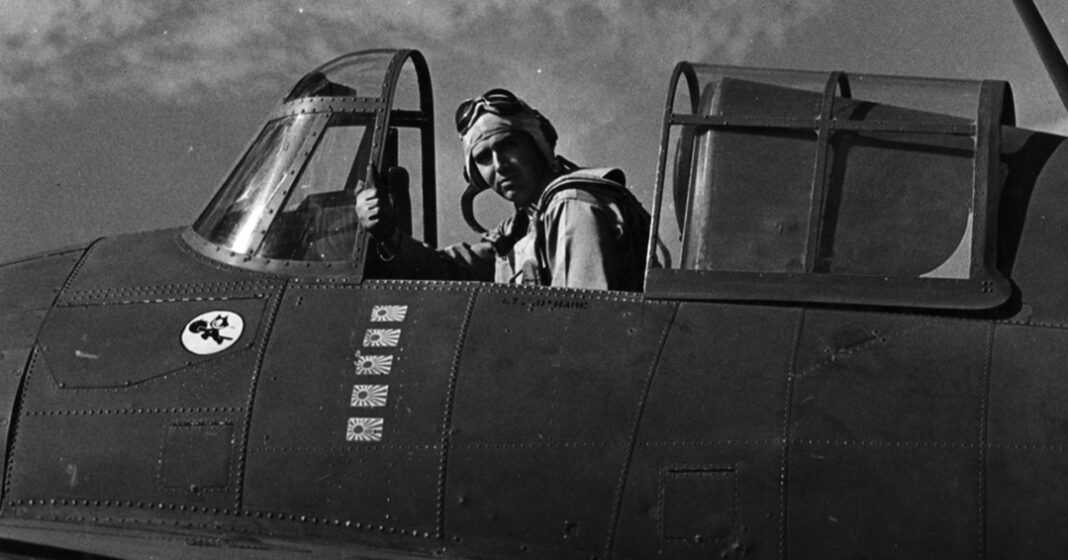

Edwards O’Hare is one of the most famous American fighter pilots in history. He became a legend thanks to his extraordinary skill and bravery in battle. Let’s take a closer look at the incredible life and feats of this American hero chicago-yes.com.
Early Life and Career
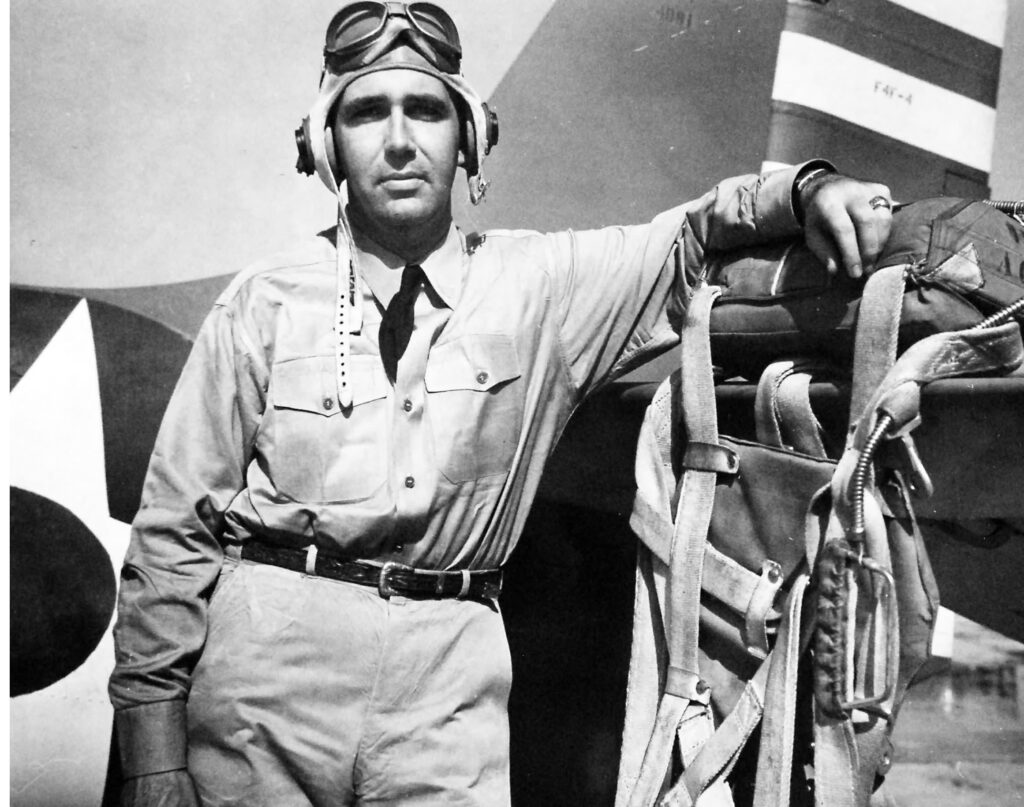
Born in St. Louis on March 13, 1914, Edwards was the only son of Selma and Edward J. O’Hare, with two younger sisters, Marilyn and Patricia. After his parents divorced in 1927, his mother raised the children. His father, meanwhile, moved to Chicago and became deeply involved with gangster Al Capone. However, the elder O’Hare eventually turned against Capone, choosing to testify against him. There are two main theories for this decision. Some believe he was determined to redeem his name and ensure his son wasn’t associated with organized crime. Others argue it was an act of self-preservation. Whatever the reason, his testimony was a crucial step toward Capone’s conviction. Tragically, in 1939, Edward J. O’Hare paid the ultimate price—he was gunned down by Capone’s men. His murder made headlines and shocked the nation.
From a young age, Edwards was set on a military career. At 13, his parents enrolled him in the Western Military Academy, where he quickly proved to be an excellent marksman, eventually becoming the president of the rifle club. After graduating at 18, he enrolled in the U.S. Naval Academy in Annapolis. He graduated on June 3, 1937, and received his first assignment aboard the battleship USS New Mexico. O’Hare was fascinated by naval aviation but, like all new officers, was required to spend two years on surface ships before specializing. After completing his sea duty, he began flight training in 1939, mastering the basics on Stearman NS-1 biplanes. By early 1940, he had completed his training on patrol aircraft and modern land-based planes, and was flying with VF-3 aboard the USS Saratoga. O’Hare quickly took to carrier landings, finding them both thrilling and challenging, and impressing more experienced pilots with his skill. In 1941, he was assigned to the USS Enterprise, where he met his future wife, Rita Wuster. They married just six weeks later.
Legendary Victories
On February 20, 1941, Edwards O’Hare earned his place in the annals of U.S. naval aviation history. The USS Lexington was deep in enemy waters, preparing for an air strike on Japanese ships in Rabaul Harbor. The mission quickly went south when a Japanese Kawanishi reconnaissance plane spotted the carrier. The enemy aircraft was shot down, but not before it radioed back the location of the American fleet. The first enemy response was an attack by nine Mitsubishi G4M “Betty” bombers. Six Wildcat fighters scrambled to intercept them, but the ship’s anti-aircraft guns took out six of the bombers, with the Wildcats finishing off the rest before any damage was done. Soon after, a second wave of nine Japanese bombers approached. Another six Wildcat fighters were sent to intercept, including O’Hare. The interception was far from perfect: four of the Wildcats were too far away to catch the bombers before they dropped their payload. Only O’Hare and one other pilot were in range.
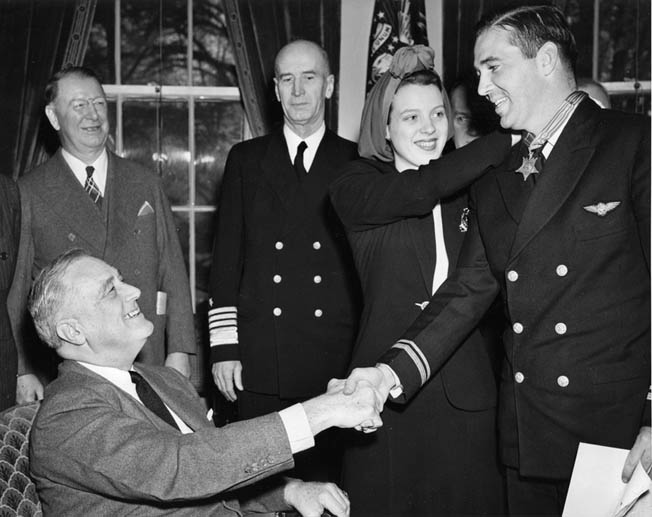
Suddenly, O’Hare’s guns jammed. With a full-throttle attack on the V-formation of bombers, O’Hare skillfully maneuvered to a firing position, and his guns were working again. He quickly shot down five of the bombers in a stunning display of skill and speed. One of his fellow pilots, Lieutenant Commander John Thach, arrived on the scene just as O’Hare ran out of ammunition. By that point, the Japanese attack had been rendered ineffective, and the Lexington was saved. Reports showed that O’Hare had used only 60 rounds for each bomber he shot down—a remarkable display of marksmanship. For this incredible feat, O’Hare was promoted to lieutenant commander, becoming the U.S. Navy’s first ace and the first naval aviator to be awarded the Medal of Honor in World War II.
His new celebrity and public relations duties kept him from combat until late October 1943, when he was put in charge of a squadron of fighters to counter low-flying, nighttime attacks by Japanese torpedo bombers. The pilots aboard the USS Enterprise developed an ingenious strategy that was a precursor to future carrier defense tactics. When the carrier detected an enemy, it would launch radar-equipped Avenger bombers and more maneuverable, but radar-less, Hellcat fighters. The Avengers would then guide the Hellcats to the enemy bombers’ location.
A Mission Gone Wrong
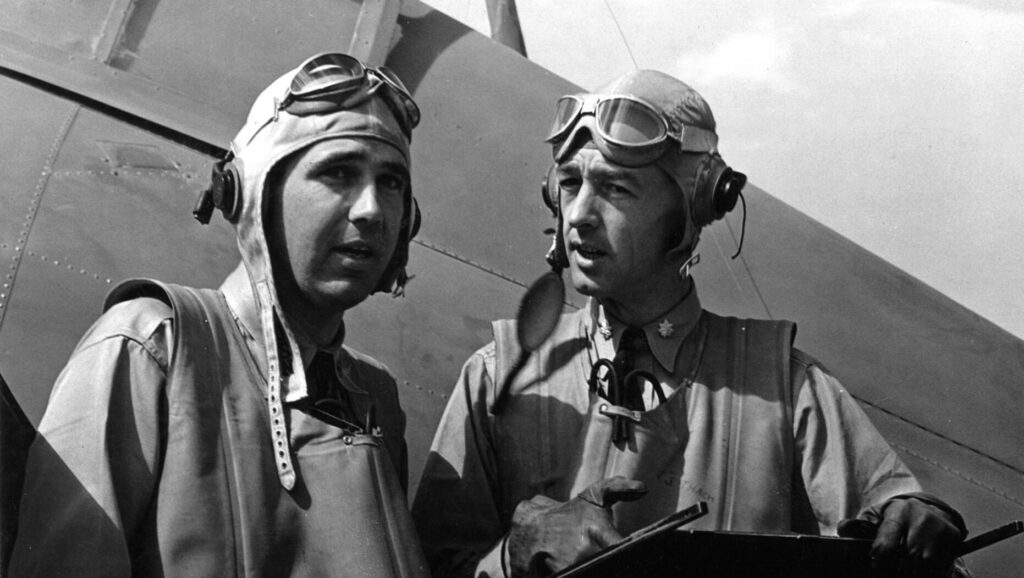
In October 1943, O’Hare was appointed commander of Air Group CAG. He was now in charge of the famed Air Group 6 on the USS Enterprise, a unit of over 100 men.
On the night of November 26, 1943, O’Hare led the Navy’s first-ever carrier-based night fighter attack to intercept a large group of enemy torpedo planes. When the call to scramble came, O’Hare, who was at dinner, raced to the ready room, wearing a loose-fitting flight suit. The “Black Panthers,” as the night fighters were called, took to the air just before dusk and engaged the enemy aircraft.
The mission was thrown into chaos as confusion and the deadly threat of friendly fire in the darkness jeopardized the pilots’ safety. A Japanese bomber flew over O’Hare’s position, almost directly behind him, drawing fire from another American plane. O’Hare’s aircraft was apparently caught in the crossfire and went down. Other pilots reported that “something” dropped almost vertically from the bomber. At dawn, three planes were sent on a search mission, but they found no trace of O’Hare or his plane. For 54 years, there was no definitive answer about who or what shot down the celebrated pilot. There are several theories: that a Japanese bomber shot him down with a well-aimed blast, that his plane was hit by a Hellcat in the dark, or that he clipped the ocean during an evasive maneuver and crashed. Despite the search, O’Hare’s fighter was never found, and he was officially declared dead a year later.
A Lasting Legacy
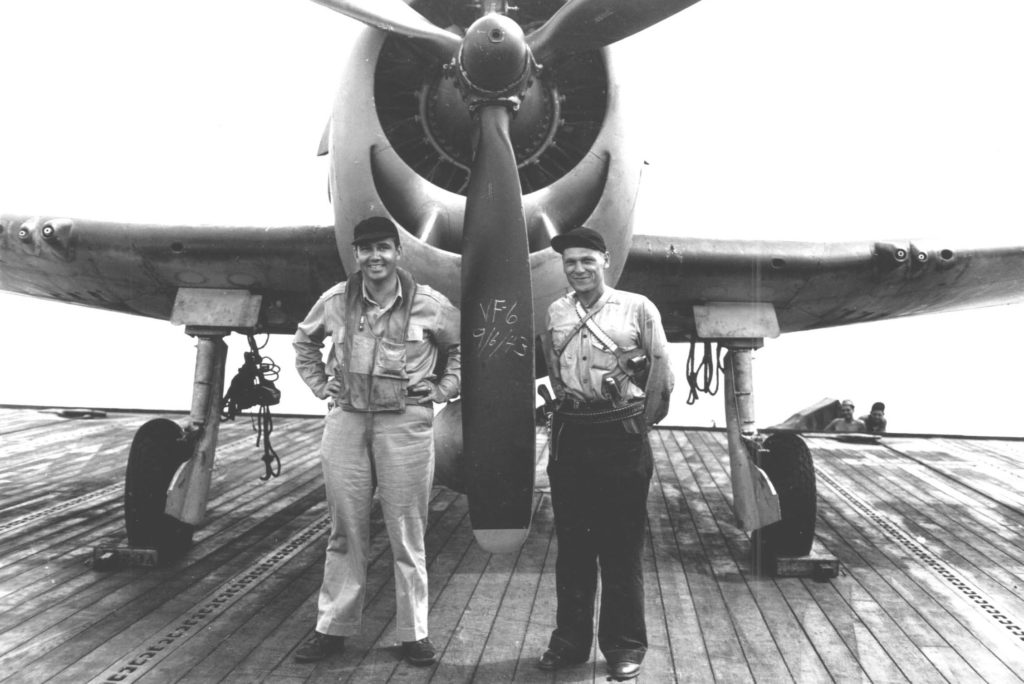
Ironically, two American pilots were awarded the Navy Cross for their role in defending the carrier from the nighttime attack.
Edwards O’Hare was remembered by his colleagues as a humble and good-natured man who was a natural leader. He held his pilots to high standards and worked tirelessly to teach them survival tactics. A passionate swimmer and spearfisherman, he often took his squadron with him on fishing trips and then cooked the fish they caught. On November 26, 1944, his wife, Rita, accepted his posthumous Purple Heart and Navy Cross.
For his service both in the air and on the ground, O’Hare has been honored in countless ways. In 1945, the destroyer USS O’Hare (DD-889) was named after him. On September 19, 1940, Chicago’s airport was renamed O’Hare International Airport. A plaque commemorating Edwards is in the Memorial Hall of the U.S. Naval Academy, and his name is etched under the “Don’t Give Up the Ship” flag. In March 1963, President John F. Kennedy placed a wreath at O’Hare International Airport in his honor.