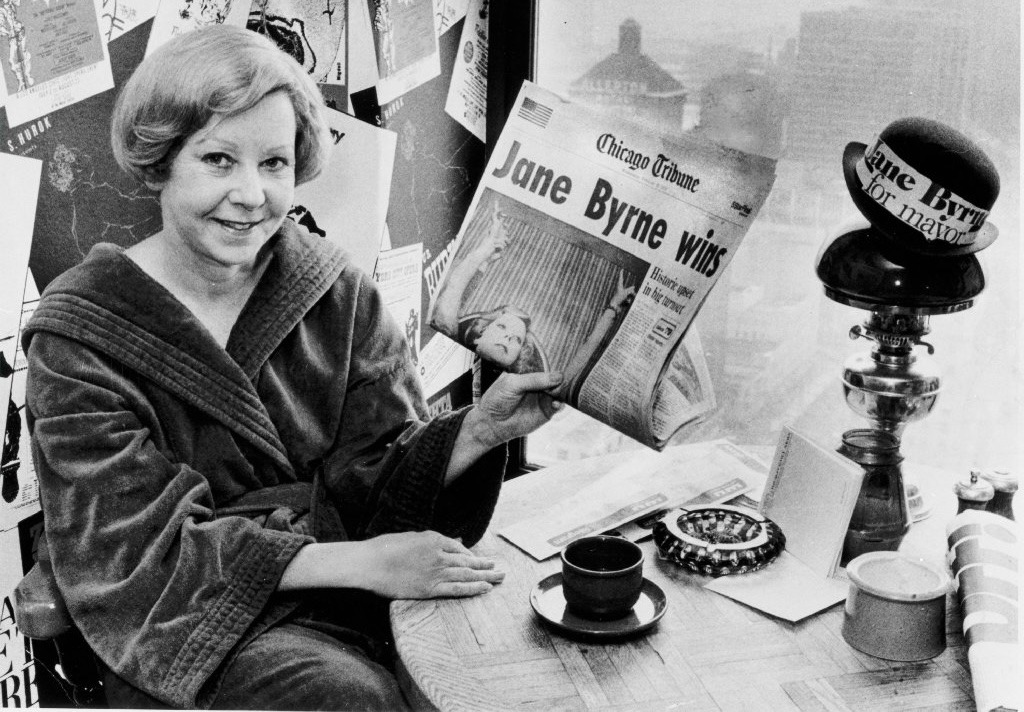

Jane Byrne’s journey is a powerful example of a bold fight for political power in a city dominated by a male-centric political machine. She didn’t just become the first woman to lead Chicago; she left a clear mark on its development. Her legacy spans from city management reforms and boosting the arts to tackling crime and advocating for citizens’ rights. Her political career was a rollercoaster of victories, crises, decisive moves, and sharp criticism. Yet, Byrne remains a historical symbol of progress and an ambitious female leader in late 20th-century Chicago. More on chicago-yes.
Early Life and Career
Jane Margaret Burke was born on May 24, 1933, at John B. Murphy Hospital on Chicago’s North Side. Her mother was a homemaker, and her father worked as a vice president at Inland Steel. She received a Catholic education, attending Saint Scholastica High School before moving on to Saint Mary-of-the-Woods College and Barat College, where she earned a Bachelor’s degree in Chemistry and Biology in 1955.
Politics entered her life in 1960 when she joined John F. Kennedy’s presidential campaign. While working on the staff, she met Chicago’s then-Mayor Richard J. Daley—a meeting that proved career-defining. At Daley’s invitation, Byrne took a position in a state anti-poverty program. Within a few years, she transitioned to working with the city’s Committee on Urban Opportunity.
In 1968, Byrne took the helm of the Chicago Department of Consumer Affairs. Her political activism soon elevated her to the national stage: she served as a delegate to the 1972 Democratic National Convention (DNC) and chaired the DNC Resolutions Committee in 1973.
The Road to the Mayor’s Office
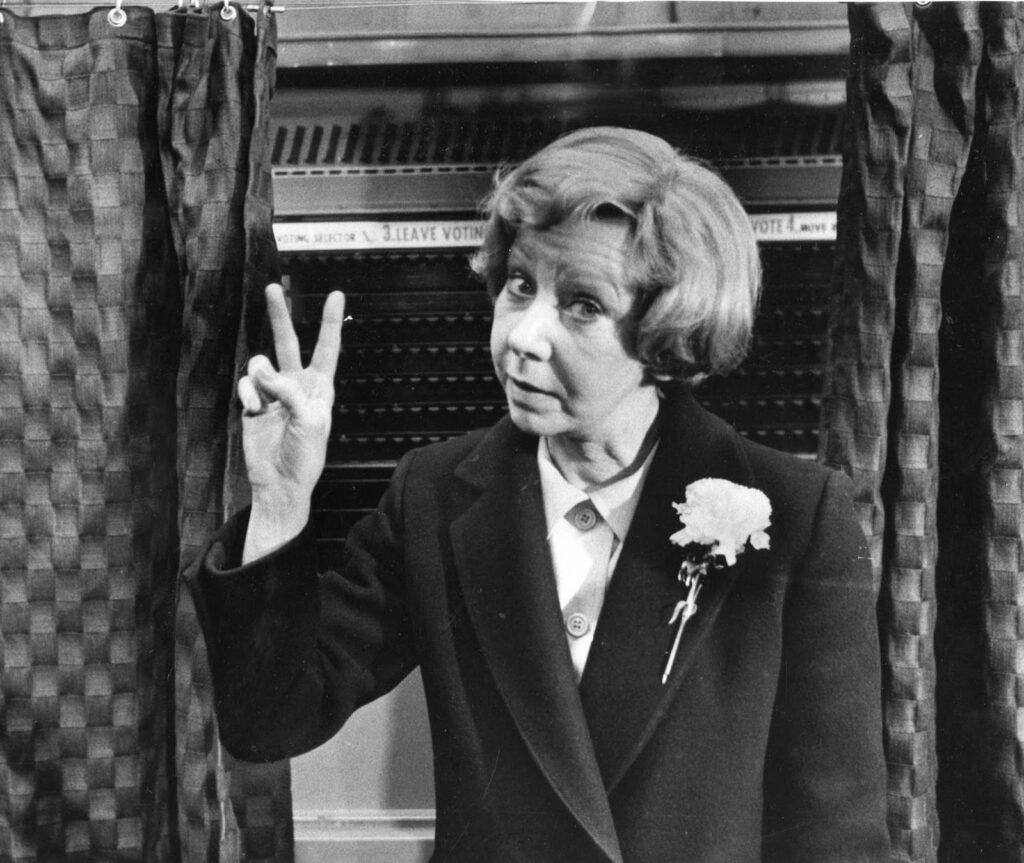
Following Richard J. Daley’s death, Chicago’s political landscape shifted. In 1975, Byrne was appointed co-chair of the Cook County Democratic Central Committee, but she was removed from the post by 1976. The conflict intensified after Byrne publicly accused the new Mayor, Michael Bilandic, of a “backroom deal” to raise taxi fares. In retaliation, she was fired from her role as Consumer Affairs Commissioner. This clash and subsequent political isolation became the catalyst for her own mayoral campaign. She officially announced her run in 1977.
Initially, political experts doubted Byrne’s chances. Her opponent’s team planned to dismiss her as overly emotional and “not serious.” However, the situation changed dramatically with the historic 1979 blizzard, which paralyzed the city and exposed the weakness of the Bilandic administration’s response. Byrne ultimately defeated Michael Bilandic by combining support from African-American voters, community activists, and the influential backing of Jesse Jackson. She won the primary election with 51% of the vote to Bilandic’s 49%. In the general election, she secured a record-breaking 82.1% of the vote. Her victory in 1979 significantly undermined the reputation of Richard J. Daley’s political machine and demonstrated that an “independent” candidate could win in a city dominated by party structures. She thus became the first woman in the city’s history to serve as mayor.
Key Decisions as Mayor
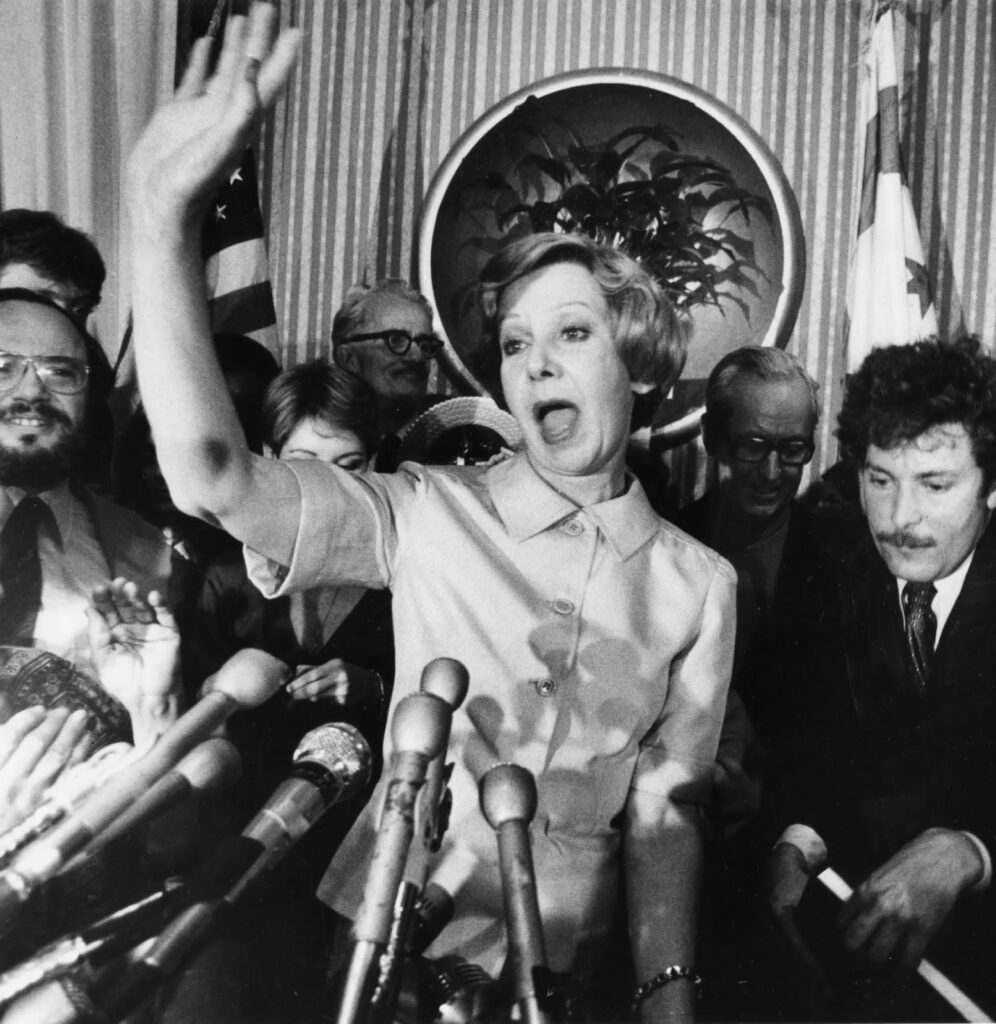
After her inauguration, Byrne made several historic moves. She supported the appointment of Ruth B. Love, the first African-American woman to serve as Chicago Public Schools Superintendent. She also became the first mayor to formally recognize the LGBTQ community, canceling police raids on gay bars and proclaiming “Gay Pride Day.” From her first days in office, Byrne was a strong advocate for cultural institutions and artistic development. At the same time, she gradually began cooperating with old-machine politicians—such as Edward Burke and Edward Vrdolyak—whom she had previously criticized fiercely.
Byrne made significant investments in culture:
- She allocated funds to the Lyric Opera of Chicago and the Auditorium Theatre.
- She supported the installation of a sculpture by Joan Miró.
- She promoted filmmaking in the city, notably for the iconic movie “The Blues Brothers.”
It was Byrne who launched the legendary Taste of Chicago festival and also backed the creation of ChicagoFest. She also pioneered the idea of renovating Navy Pier and establishing the future Museum Campus.
One of her most controversial moves was her temporary relocation to the crime-ridden Cabrini-Green housing project in 1981. Her goal was to draw attention to the issues of violence. Immediately after her move, police conducted a raid and arrested gang members who were reportedly planning a shooting at her building. Byrne lived there for three weeks, after which critics labeled the move a mere publicity stunt.
Byrne’s administration earned the nickname “revolving door” due to constant personnel changes. A particularly sharp point of criticism was replacing African-American members of the School Board with white members, some of whom held controversial views. In the area of public safety, she made a series of high-profile staffing rotations, including firing Police Superintendent James O’Grady, only to later rehire him near the end of her term.
In 1982, she proposed an ordinance banning the registration of new handguns. The measure was passed but was later ruled unconstitutional by the U.S. Supreme Court many years later.
Defeat in the 1983 Election
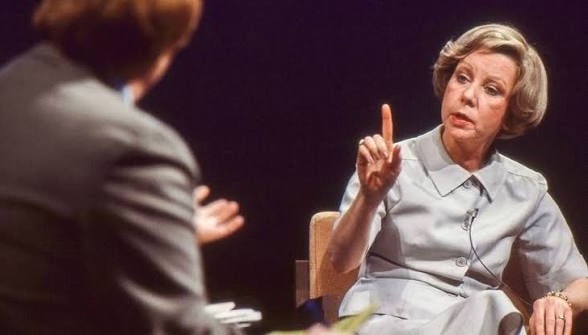
By 1983, her support among voters had significantly dropped, especially among African-American citizens. In the primary, she placed second, losing to Congressman Harold Washington.
Following this defeat, Byrne attempted several political comebacks. She participated in the 1987 primary, ran for Clerk of the Circuit Court in 1988, and made her final mayoral bid in 1991, but only secured 5.9% of the vote.
Personal Life
In 1956, she married William Byrne, a Marine pilot, who was tragically killed in a plane crash in 1959. His death deeply affected Byrne, who was left to raise their young daughter, Katherine. She married a second time in 1978 to journalist James McMullen, who passed away in 1992. Byrne lived in the same home for over 40 years. Her daughter, Katherine, an attorney, died in 2024. Byrne is survived by her grandson, Willie.
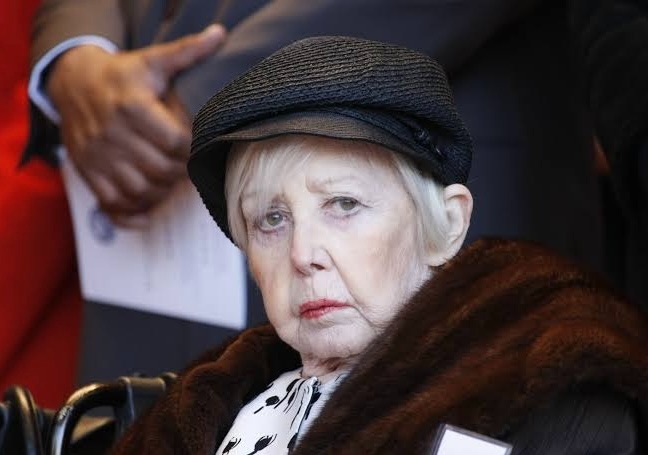
Jane Byrne passed away on November 14, 2014, at the age of 81 due to complications from a stroke. She was buried at Calvary Catholic Cemetery in Evanston. Both during her life and immediately after her death, the city honored her memory. The plaza near Water Tower Place was named Jane M. Byrne Plaza, and the Circle Interchange was renamed the Jane Byrne Interchange. Her name also inspired the Sufjan Stevens composition, “Inaugural Pop Music for Jane Margaret Byrne.” The Illinois State Register notes that her policies during her tenure left long-lasting structural changes, from transparent budget monitoring to encouraging community activism. Her time in Cabrini-Green did indeed act as a catalyst for change: following her three-week stay, renovations were carried out, public services (such as a police station) were added, and a national discussion was sparked about the living conditions in public housing.
Jane Byrne went down in history as the woman who shook up Chicago’s political system and led the city during a challenging period. Her actions were often polarizing but undeniably impactful: from human rights reforms and cultural development to the crisis in Cabrini-Green and the creation of iconic festivals. Her life is a story of ambition, bravery, conflict, and the fight for her voice in politics.