
Throughout U.S. history, many spies have operated with distinct missions. Among the most damaging was Robert Hanssen, who, without remorse, provided the Soviet Union with vital information, disregarding others’ lives for substantial financial gain. For his “dirty deeds,” he was sentenced to life imprisonment without parole. Let’s delve into Hanssen’s life and his treasonous acts against his country on chicago-yes.com.
Childhood and Youth
Robert was born on April 18, 1944, in Chicago, to a family with a police officer father and a homemaker mother. His father was part of a special unit known as the Red Unit, established to track communism supporters during the “Red Scare.” Hanssen’s mother devoted her time to raising him, while his father always remained distant. Robert struggled socially due to shyness and quietness, making it hard for him to make friends.
He attended Knox College in Galesburg, where he studied chemistry and Russian. In 1966, he entered the Northwestern University Dental School but dropped out in 1968 to pursue psychiatry. His father helped him secure a weekend job as an orderly at a psychiatric hospital, though Hanssen quickly grew bored and returned to Northwestern, where he earned a master’s degree in accounting and business administration. Around this time, he married Bernadette Bonny Wauck, a devout Catholic, prompting Hanssen to convert to Catholicism. After working briefly in accounting, he followed in his father’s footsteps by joining law enforcement, enrolling in a specialized anti-corruption training program. By 1976, Hanssen had joined the FBI.
A Model Family Man and Employee
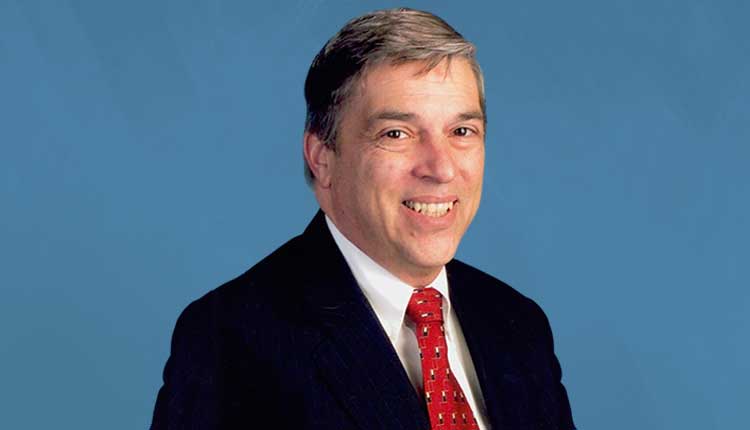
Hanssen’s career in the FBI progressed quickly. He began his career in the small town of Gary, Indiana, and, after a few years, was promoted to New York, where he managed financial matters in the Criminal Investigation Division. Living with his wife and four children in Scarsdale, Hanssen struggled financially and decided to use his FBI position to engage in counterintelligence. He approached Russian agents, offering them classified documents. They accepted, and soon, Hanssen received his first payment of $20,000. His wife accidentally discovered his espionage when she found him counting cash in their basement, hiding documents from her. Hanssen confessed, but instead of turning him in, Bonny convinced him to confess to a priest. Following the priest’s advice, Hanssen donated the Soviet earnings to charity.
Fearful after this incident, Hanssen temporarily ceased his collaboration with Soviet intelligence. No one in the FBI suspected him. He appeared intelligent, calm, and slightly distant. This did not prevent his further career advancement. In 1981, he transferred to the Washington office, and in 1983, he began working with the Soviet Analytical Unit, gaining access to highly sensitive information. After four years, Hanssen returned to New York.
Ramon Garcia Undercover
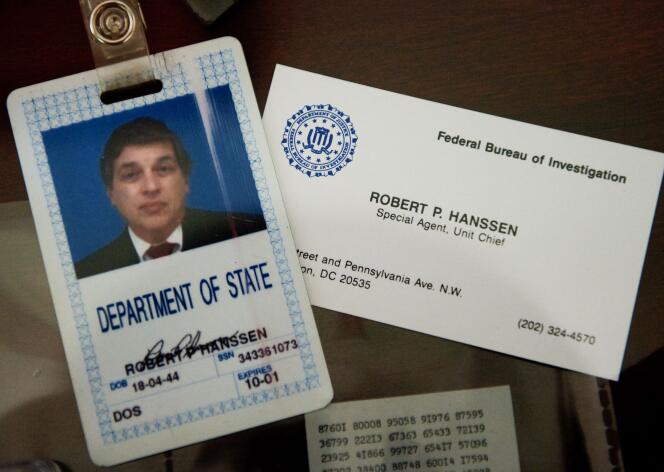
In 1985, Hanssen resumed his collaboration with the KGB, passing along critical information about Soviet spies working for the U.S. and aiding in the arrest and execution of nine individuals. Additionally, he disclosed U.S. readiness for nuclear warfare and exposed a tunnel beneath the Soviet Embassy in Washington used by American intelligence for surveillance. He also revealed the names of three key Soviet agents working for the U.S., ultimately providing the USSR with around 6,000 classified documents.
In 1990, Mark Wauck, Hanssen’s brother-in-law and an FBI agent, learned of hidden cash in Hanssen’s home and suspected espionage. He reported this to the FBI in Chicago, but his warnings were ignored.
In 1991, after the collapse of the Soviet Union, Hanssen halted his activities for fear of exposure. He continued to work at the FBI for eight more years, until 1999, when former KGB operative Vladimir Putin came to power, and Hanssen resumed his espionage — for the last time.
Under the alias Ramon Garcia, Hanssen skillfully concealed his identity, evading suspicion through old-school spy tactics. He relied on “dead drops,” leaving documents at designated locations for his handlers to retrieve.
The Hunt for the “Mole”
In their search for a mole, the FBI recruited a former KGB agent, offering him over $7 million to reveal the mole’s identity. The agent provided the FBI with a voice recording of a conversation between the spy and his Russian handler, along with a black plastic container with Hanssen’s fingerprints.
The FBI launched a surveillance operation on Hanssen, transferring him from the State Department to a fictitious FBI position for closer observation.
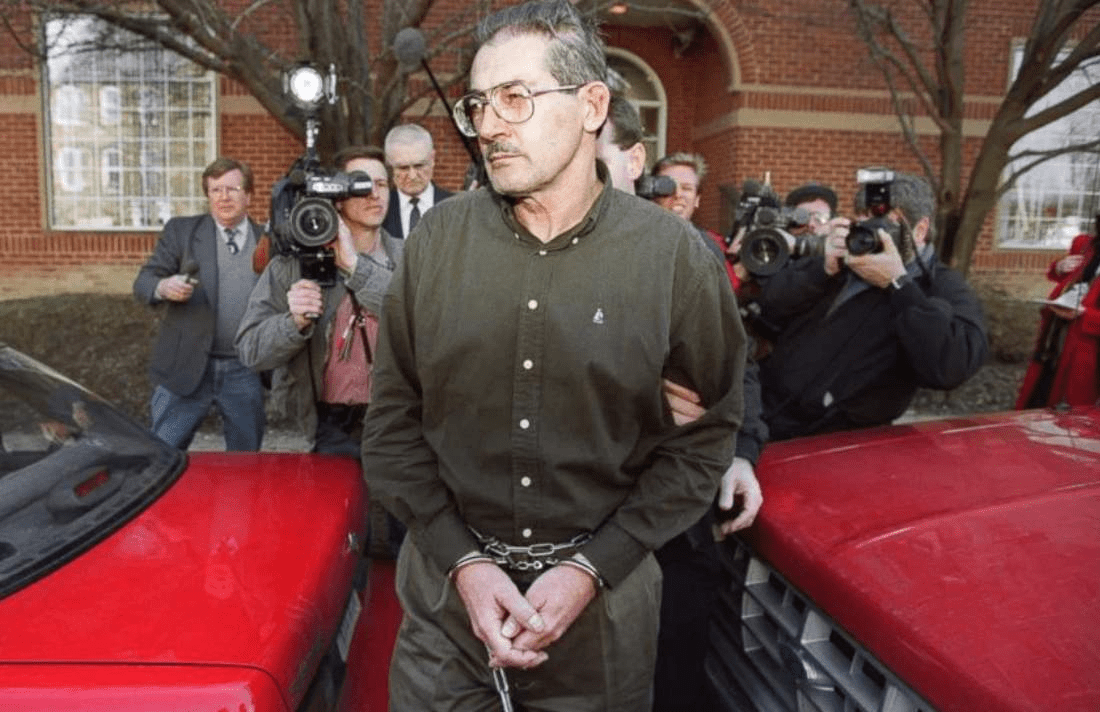
By 2001, nearly 300 agents were working on the case, eagerly awaiting the mole’s next drop. Finally, on February 18, Hanssen left a dead drop in Foxstone Park near his home. Caught red-handed, he was arrested and charged with espionage. Initially, Hanssen denied all allegations, but in spring 2001, investigators filed 21 counts against him, with 14 carrying the death penalty. To save his life and secure his family’s future, Hanssen confessed to his crimes.
Although President George W. Bush initially supported Hanssen’s execution, intelligence officials persuaded him otherwise. Hanssen cited financial support for his family as his motive but showed no remorse for his actions. In 2002, he was sentenced to life imprisonment without parole and transferred to the federal prison in Lewisburg, Pennsylvania.
Over his years of Soviet collaboration, Hanssen earned $1.4 million. He remained an enigmatic figure, living modestly while amassing wealth through treason, engaging in religious practices while betraying vital secrets, endangering lives, and causing deaths.
Hanssen died in his prison cell on June 5, 2023, at age 79.
Two films depict Hanssen’s story: Master Spy: The Robert Hanssen Story (2002) and Breach (2007).
Source:
- https://time.com/archive/6953158/the-fbi-spy-it-took-15-years-to-discover-one-of-the-most-damaging-cases-of-espionage-in-u-s-history-an-inside-look-at-the-secret-life-and-final-capture-of-robert-hanssen/
- https://www.cnn.com/2013/03/25/us/robert-hanssen-fast-facts/index.html
- https://www.history.com/news/robert-hanssen-american-traitor