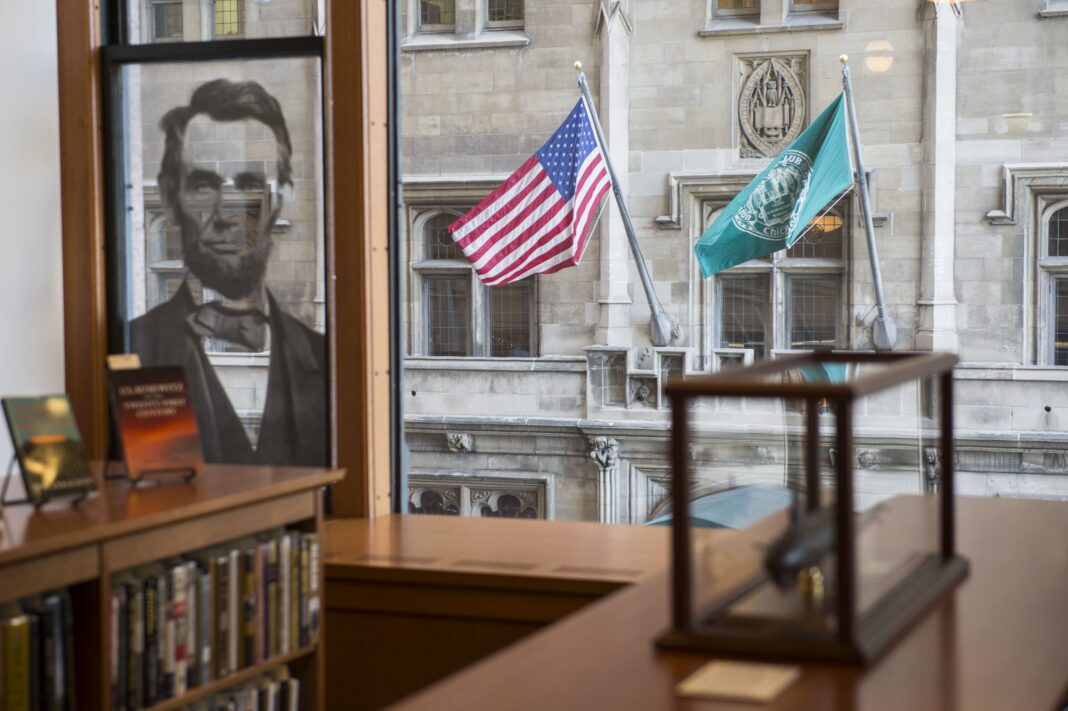

Wars have left a deep and painful mark on Chicago and its people. Countless individuals lost loved ones, their peace of mind, and suffered wounds that would last a lifetime. All around the city, from downtown to its various neighborhoods, buildings, museums, and memorials stand as somber reminders of the brave men and women who fought for their country. For a closer look at Chicago’s unique military history, check out chicago-yes.com.
Fort Dearborn and Oak Woods Cemetery
The city’s military history begins at its very roots. Fort Dearborn was once located at the intersection of Michigan Avenue and Wacker Street. Following a battle during the War of 1812, warriors from the Potawatomi tribe destroyed the fort. It was rebuilt on the same spot but fell into disrepair after the Black Hawk War in the 1830s. The Great Chicago Fire of 1871 eventually claimed what was left of it. Today, bronze plaques on the sidewalk of Michigan Avenue mark the fort’s original location.
Another powerful landmark of Chicago’s war history is Oak Woods Cemetery. During the Civil War, Camp Douglas was built in the area of 31st Street and Cottage Grove. It became one of the largest and deadliest prisoner-of-war camps in the Union. Around 4,000 Confederate soldiers from the camp are buried in a mass grave at Oak Woods Cemetery. This is considered the largest mass grave in the Western Hemisphere and a largely forgotten piece of Chicago’s military past.
The Soldiers’ Home
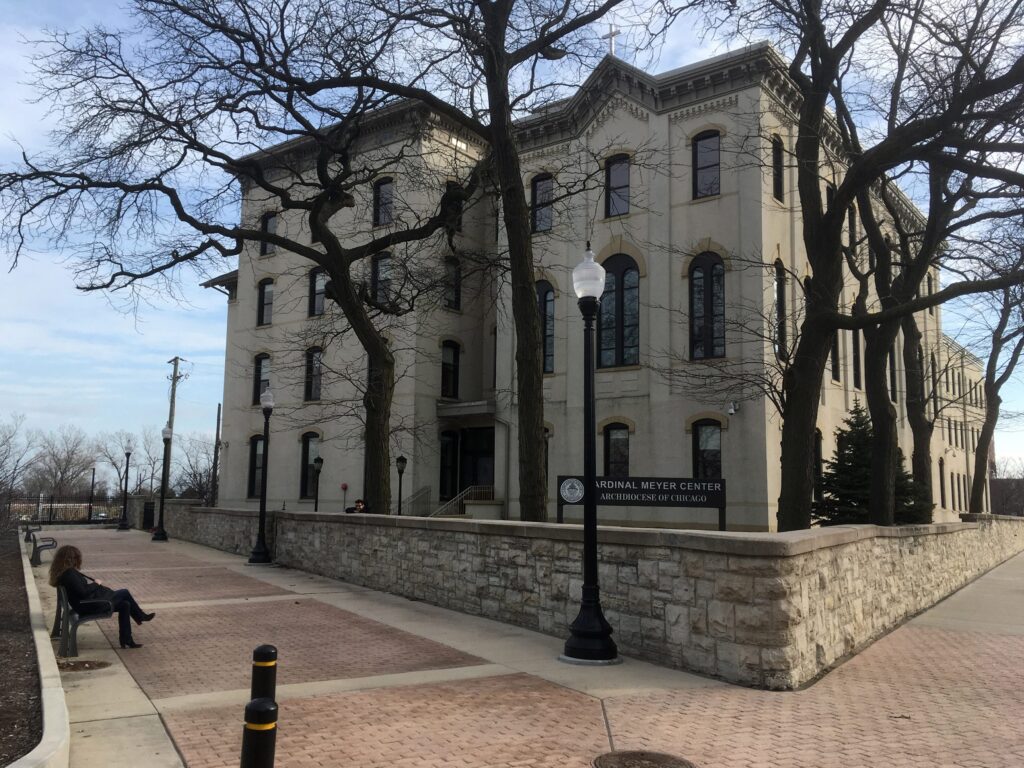
Just south of Camp Douglas, at the corner of 35th Street and Lake Shore Drive, stands the Soldiers’ Home. This magnificent structure is one of Chicago’s oldest military-related buildings, with direct ties to the Civil War. Built in 1861, it was converted into a convalescent center during the war and housed disabled veterans in its later years. The Italianate-style building remains today as a part of the Archdiocese of Chicago.
Chicago Cultural Center
When you enter the Chicago Cultural Center from Randolph Street, you’ll find the Grand Army of the Republic (GAR) Rotunda at the top of a grand marble staircase. The ceiling is decorated with reliefs of swords, shields, helmets, and flags, a poignant reminder for visitors of the war’s immense toll.
After the Civil War, Union Army veterans formed the fraternal organization known as the GAR to advocate for surviving veterans and honor their fallen comrades. Chicago chapters of the organization built a Memorial Hall within the Chicago Cultural Center, which served for many years as a meeting place for the GAR and a repository for Civil War artifacts. The hall is still there, immortalized by its 40-foot-wide stained-glass dome.
Soldier Field and Navy Pier
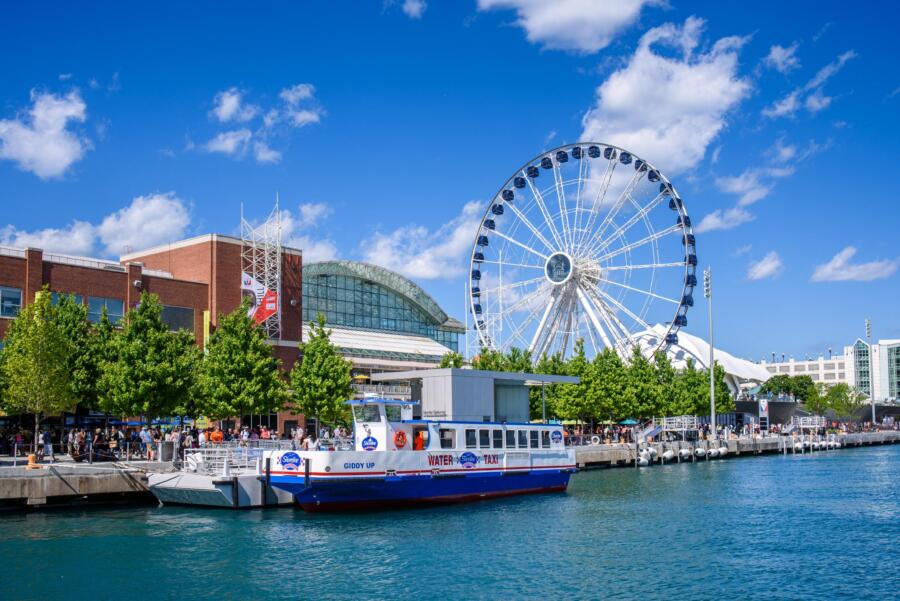
Two of Chicago’s most recognizable lakefront landmarks, Soldier Field and Navy Pier, are also tributes to the city’s role in World War I. Much of the city’s “Burnham Plan” was constructed in the 1910s and 1920s, a period when millions of American soldiers were returning from the war. Honoring the fallen and the brave veterans became a priority for American politicians. In 1927, city officials renamed the Municipal Stadium in Grant Park to Soldier Field and the Municipal Pier to Navy Pier.
During World War II, Navy Pier continued to live up to its name. In 1941, the U.S. Navy repurposed it into a training center. Throughout the war, over 10,000 sailors and aviators were housed there, safe within the Great Lakes. The bottom of Lake Michigan is believed to be littered with the wreckage of naval planes that crashed during failed training exercises.
Soldier Field, famously home to the Chicago Bears, also stands as a monument to the men and women who died in World War I. The stadium, built in 1924, is a symbol of both athletic and military history. For a closer look at its military ties, you can take a stadium tour to see the Memorial Waterfall and the 280-foot-long wall with eight medallions honoring different branches of the armed forces, located at the north entrance.
The Fighting Eighth and Bronzeville’s Victory Monument
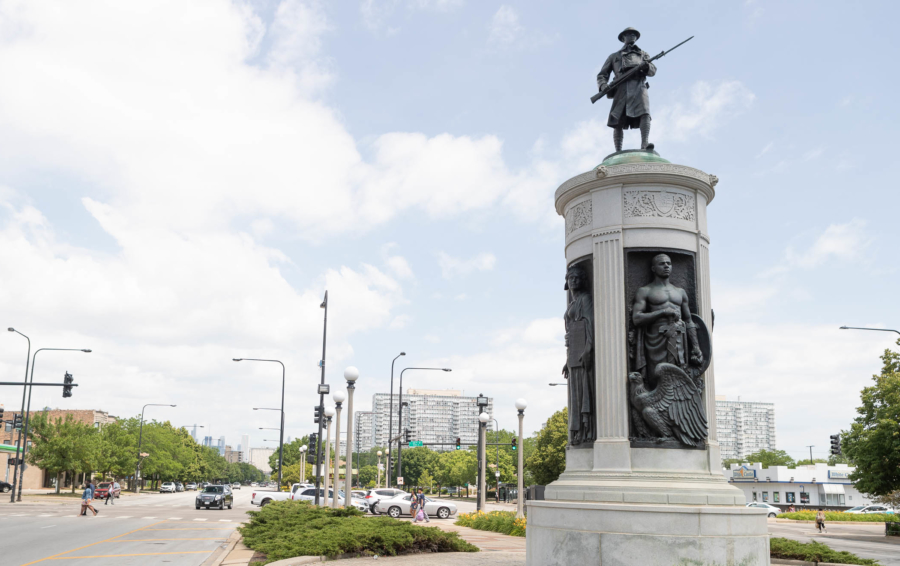
No Chicago neighborhood has a more visible military history than Bronzeville. The former Camp Douglas became home to the “Fighting Eighth,” the first U.S. military regiment comprised exclusively of Black soldiers. Formed in 1870, right after the Civil War, the Eighth Regiment of the Illinois National Guard solidified the standing of free African Americans in Chicago society. The monument to the soldiers of the Eighth Regiment is located at the intersection of King Drive and 35th Street. The Victory Monument is dedicated to the Black soldiers from Chicago who fought bravely on the front lines in France during World War I. The Black serviceman atop the white granite shaft is an important marker of Chicago’s military legacy.
Battle of Midway Memorial
The Battle of Midway memorial at Midway International Airport features photographs, interactive kiosks, and an SBD Dauntless aircraft suspended from the ceiling. This plane was pulled from the bottom of Lake Michigan in 1991, 47 years after it crashed during a training exercise. It’s now part of an exhibit that provides an educational experience about the contributions of the pilots, engineers, and the city of Chicago during World War II.
National Veterans Art Museum
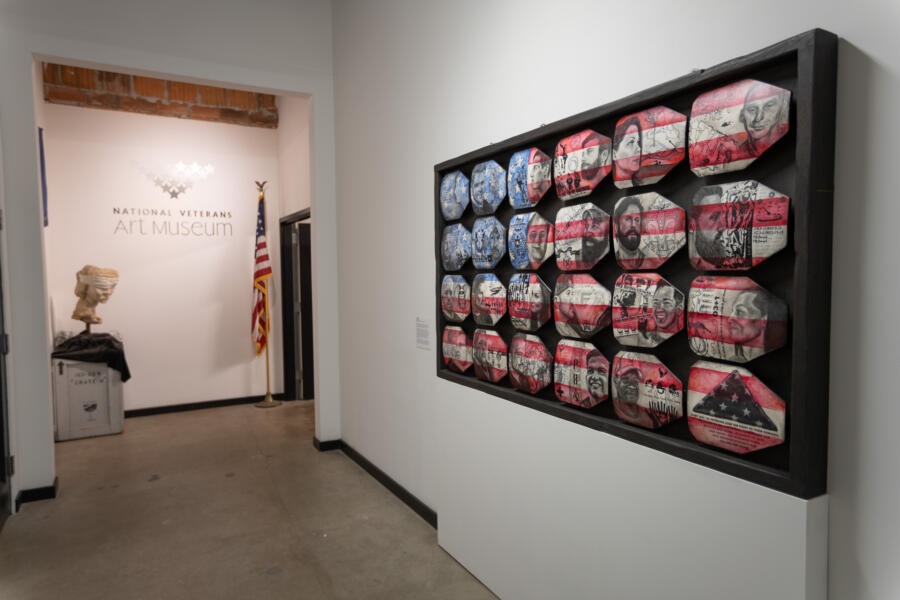
Opened in 1981, the National Veterans Art Museum collects, preserves, and exhibits combat-inspired artwork created by veterans. You can visit one of the rotating exhibits or explore their permanent collection of more than 2,500 pieces. The museum also offers excellent educational programs to help visitors engage with the collections.
Vietnam Veterans Memorial Plaza
This plaza, located along the Chicago River, is dedicated to the events of the war and the servicemen from Chicago who fought and died in Vietnam. Built in 2005, the plaza features a terraced lawn, a waterfall, and a reflecting pond. Throughout the memorial, you can find dozens of military plaques and emblems dedicated to the branches of service that served in Vietnam.
Rosehill Cemetery and Civil War Museum
Rosehill Cemetery, located in the city’s northwest section, is the final resting place of 14 Union generals, six drummer boys, and hundreds of Civil War soldiers. Part of the administration building has been turned into a Civil War museum, with exhibits telling the story of the war, the people buried there, and Chicago’s role in the conflict. The Chicago Architecture Center also offers a two-hour tour of the cemetery’s military landmarks.
Eternal Flame at Daley Plaza
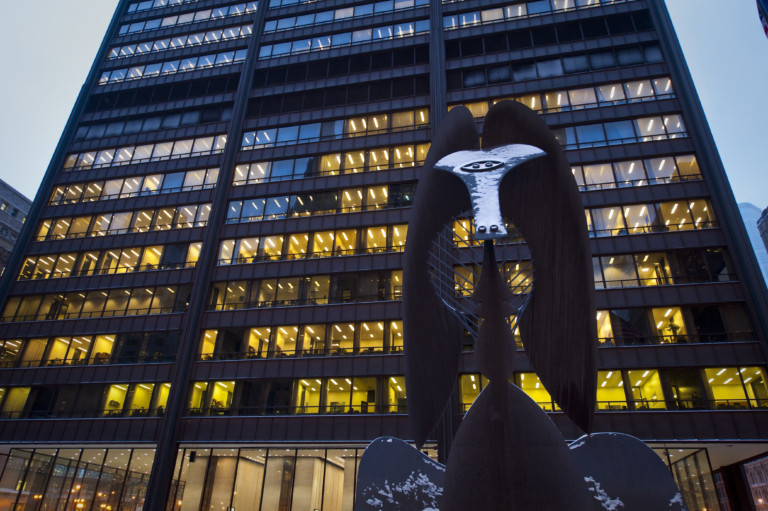
Daley Plaza in downtown Chicago, next to the Richard J. Daley Civic Center and City Hall, is home to the Eternal Flame memorial. It’s dedicated to American soldiers who died in combat from the early 20th century to the Vietnam War. An annual wreath-laying ceremony is held here during the Memorial Day Parade.
John Logan Monument
Located in Grant Park, the bronze monument to John Logan is a tribute to the Illinois-born military leader. He served in both the Mexican-American and Civil Wars, rising to the rank of general. Logan also led the Grand Army of the Republic and is considered a key figure in establishing Memorial Day. As you can see, Chicago is filled with monuments and historic sites that tell the story of war and the role its soldiers played in them.