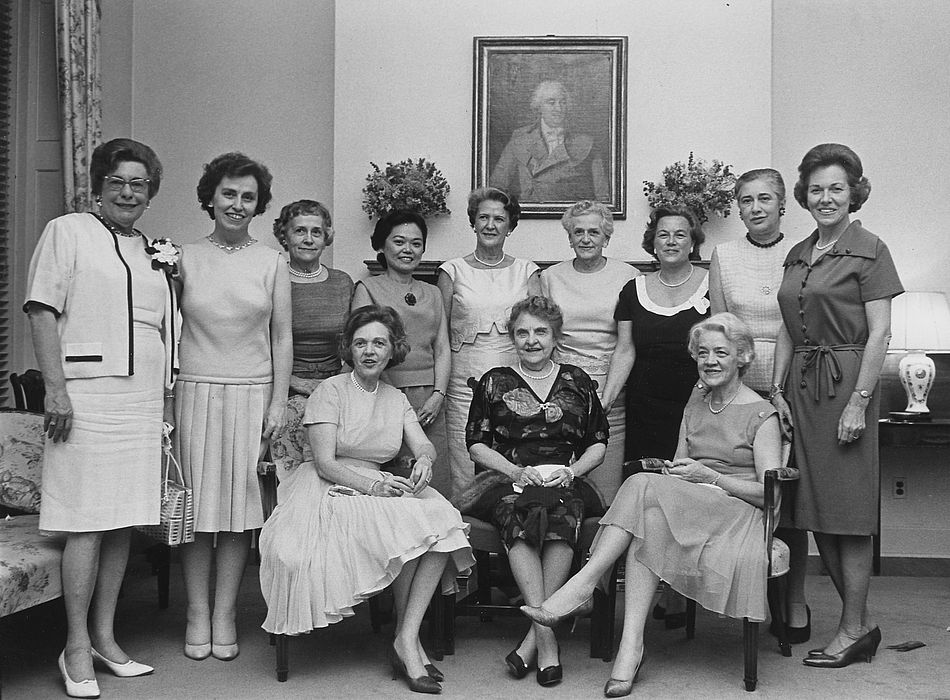

Emily Taft Douglas was a congresswoman, civil rights activist, and feminist. Throughout her political career, she advocated for international cooperation to preserve peace and promote cultural exchange, as reported by chicago-yes.com.
Early Life and Youth
Emily was born in Chicago on April 10, 1899. She was the second of three daughters of Lorado and Ada, and the granddaughter of Carlos Taft. Emily’s father was a renowned sculptor and educator, while her grandfather was a respected professor of geology at the University of Illinois. From an early age, she traveled extensively across Europe with her family. In 1919, Emily earned a Ph.D. from the University of Chicago and later enrolled at the American Academy of Dramatic Arts. In 1926, after graduating, she began working in theater and debuted in the Broadway production of The Cat and the Canary.
During World War I, Lorado Taft was a member of the League to Enforce Peace. Emily was deeply influenced by her father and was inspired by President Woodrow Wilson’s plans to create the League of Nations. After her father’s death, Taft vowed to carry on his mission.
Representative of Illinois
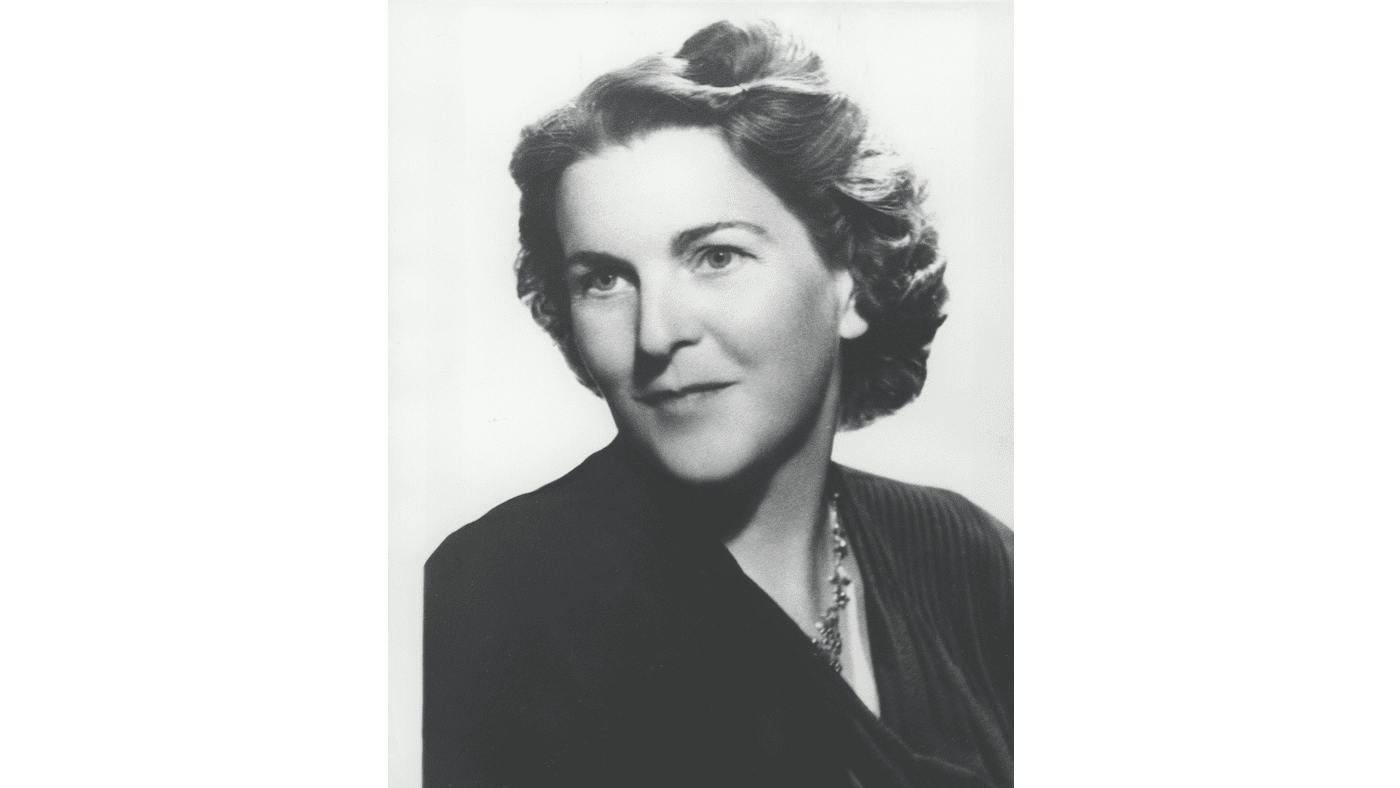
In 1931, Emily married University of Chicago economics professor Paul H. Douglas, with whom she shared an interest in social reforms. In 1933, she gave birth to their daughter, Jean. While her husband pursued a political career in the city and state, Douglas volunteered for the Illinois League of Women Voters (ILWV), eventually becoming its secretary. She organized and led the ILWV’s Government and Foreign Policy Department. In 1942, while her husband served in the Marine Corps, she became executive secretary of the Chicago Council on Foreign Relations.
In 1944, Emily ran for Congress as a Democrat representing Illinois and defeated Stephen Day. Upon delivering her first speech in the House of Representatives, she was referred to as the “gentleman from Illinois.”
Douglas also served on the House Committee on Foreign Affairs. She co-authored legislation to transfer arms control functions to the United Nations and advocated for the abolition of atomic weapons. As a representative deeply interested in foreign policy, she emphasized the importance of U.S. interaction with other countries and the doctrine of collective security.
She also voted against the establishment of the House Un-American Activities Committee and supported the drafting of nurses into the armed forces.
Achievements as a Senator
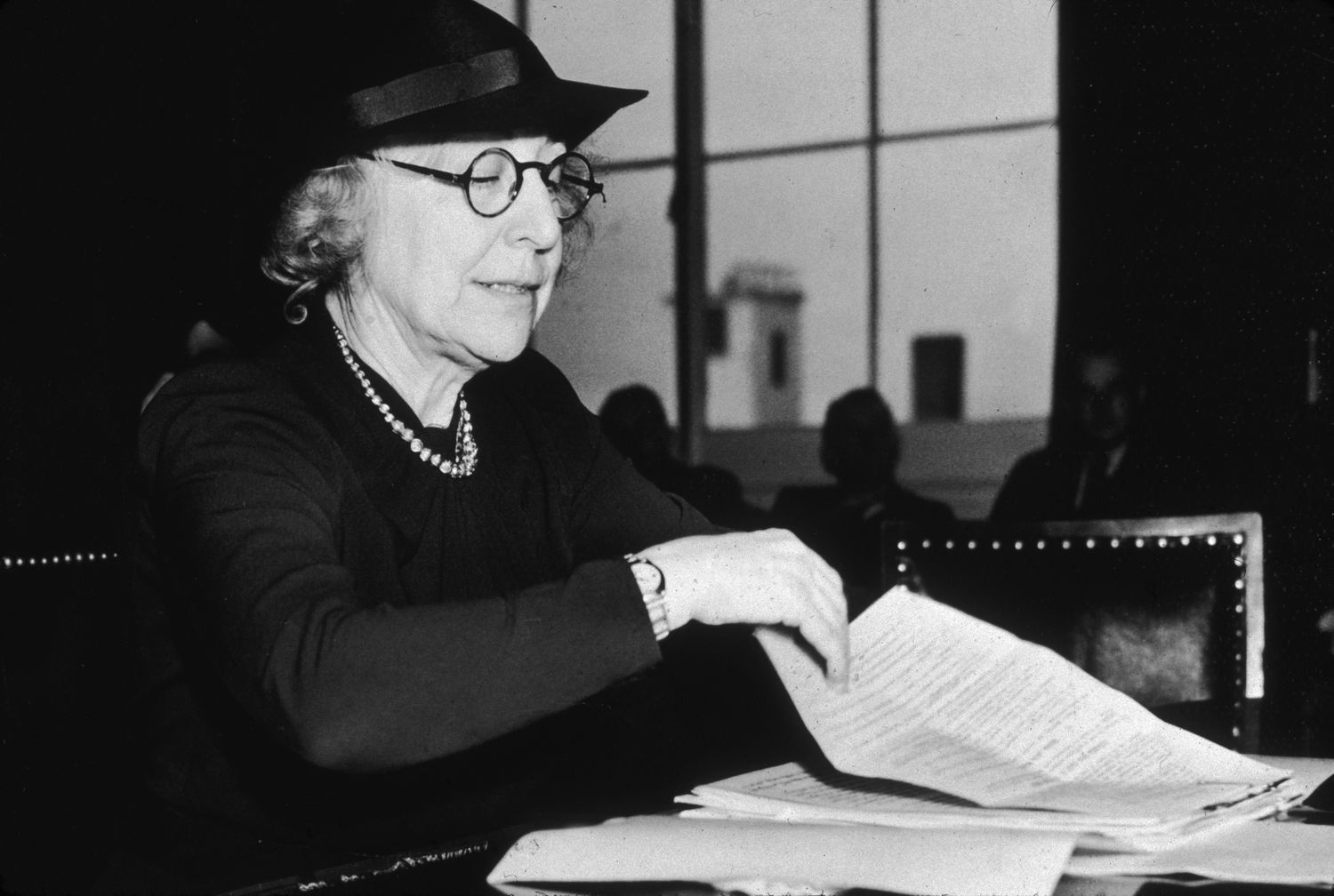
In 1948, Emily Douglas was elected a U.S. Senator from Illinois, serving until 1967. During this time, she began campaigning on behalf of her husband and served as his political adviser. She organized his monthly radio and television broadcasts for Illinois voters and frequently spoke at rallies and public forums.
In 1951, Douglas represented the United States at a UNESCO conference. In 1965, she joined Martin Luther King Jr. during the Selma march in Alabama, advocating for African American voting rights.
While active in politics, Emily also found time to write. She published several books, including the popular children’s story Appleseed Farm (1948) and a collection of essays The Story of the Women Who Helped Shape America (1966).
A religious and political liberal, Emily was a member of the Unitarian Church in Washington, D.C., and attended the Cedar Lane Universalist Church in Bethesda, Maryland, from 1950 to 1965.
In 1969, Emily suffered a stroke, which marked the end of her political career. She later helped her husband write his autobiography In the Fullness of Time (1971). Emily Douglas passed away on January 28, 1994, leaving behind a legacy of significant political achievements.