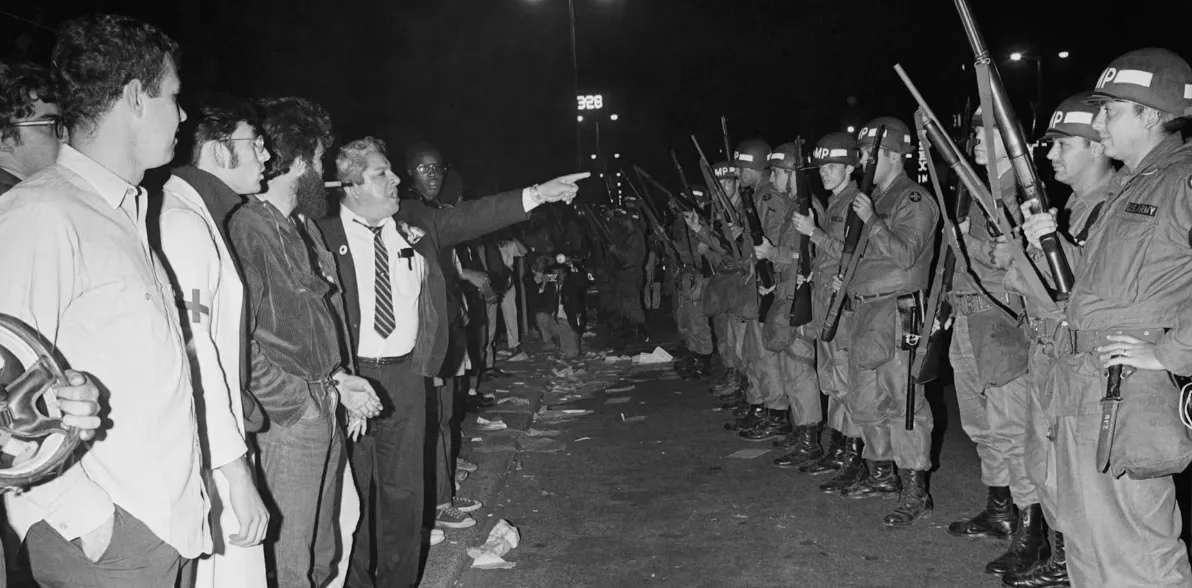
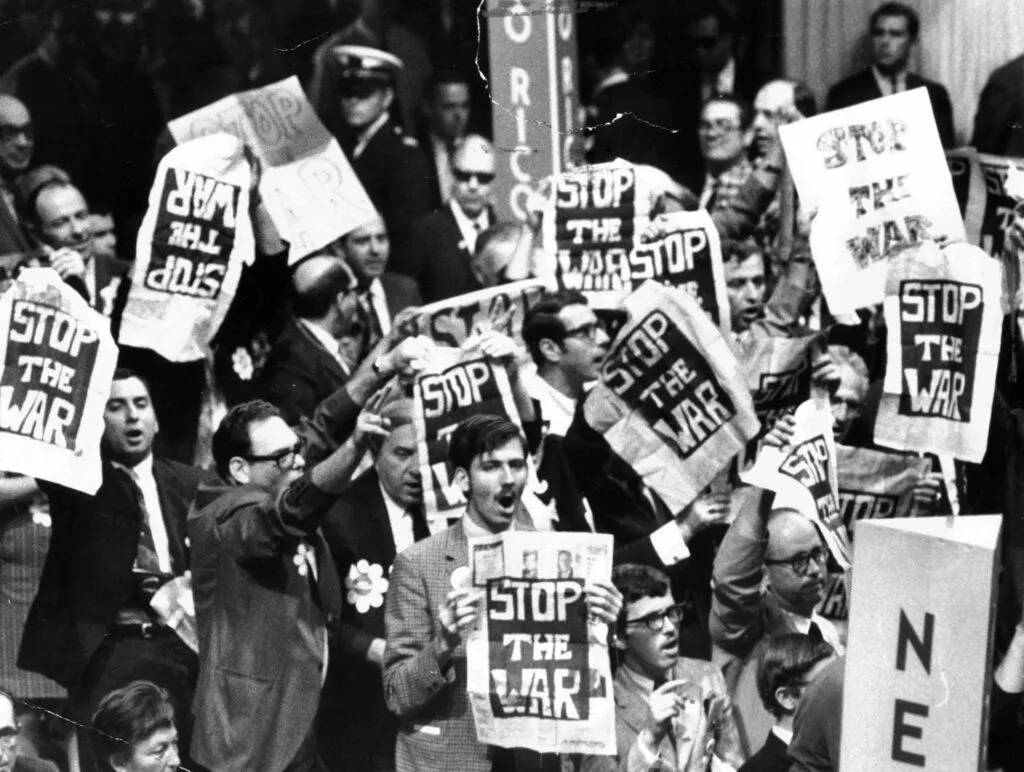
The 1968 Democratic National Convention in Chicago remains one of the most tumultuous political flashpoints in modern American history. Vice President Hubert Humphrey secured the presidential nomination without entering a single primary, while the streets of Chicago erupted into mass anti-war protests met by aggressive police crackdowns. Graphic, televised footage of the violence laid bare the deep fractures within American society and brought into sharp question the legitimacy of how presidential candidates were chosen. Read more on chicago-yes.
Why 1968 Marked a Historic Turning Point in American Politics
By the late 1960s, the United States was engulfed in a severe social and political crisis. Opposition to the Vietnam War was escalating, the fight for civil rights heightened racial tensions, and a string of high-profile political assassinations deepened a pervasive sense of national instability.
The Democratic Party, which held both the White House and majorities in Congress, could not escape bitter internal strife. Democrats splintered over the continuation of the war, the pace of civil rights reforms, and the very method of selecting their presidential nominee. The party establishment stood by the Johnson administration, insisting the military campaign should continue until North Vietnam made reciprocal concessions. Conversely, the party's surging insurgent wing demanded an immediate halt to the bombings and a swift shift toward a negotiated peace.
At the same time, public outrage was growing over the opaque, closed-door nomination process. In most states, local party bosses handpicked the delegates sent to the national convention. Primary results carried little weight, giving ordinary voters across the country virtually no real leverage over the final outcome. These compounding tensions set the stage for an explosive showdown, and Chicago became its ground zero.
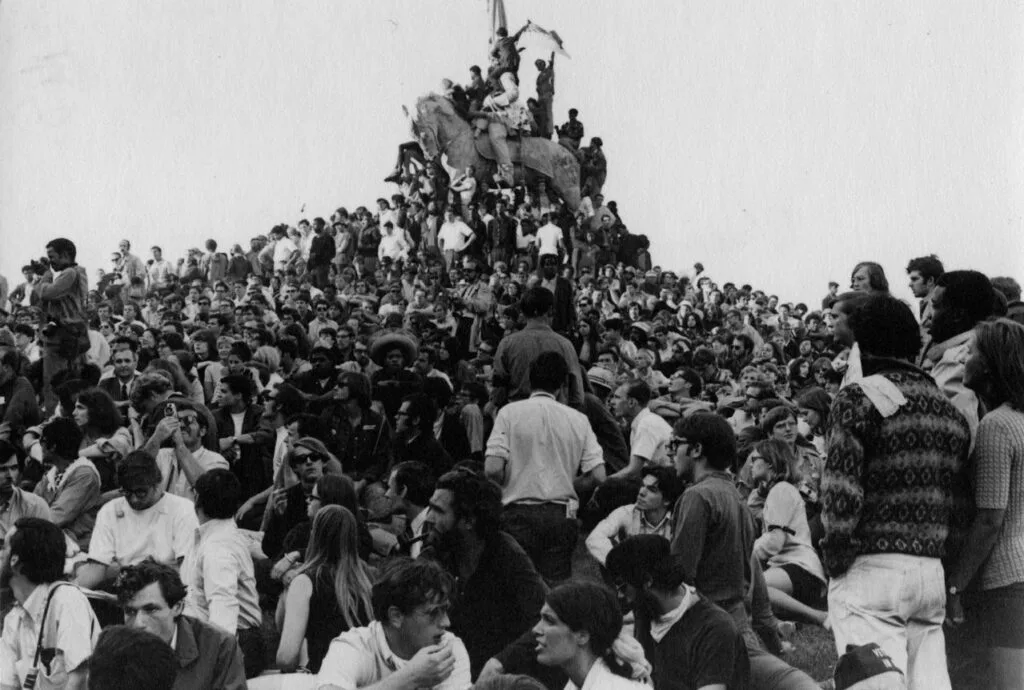
The 1968 Democratic National Convention in Chicago
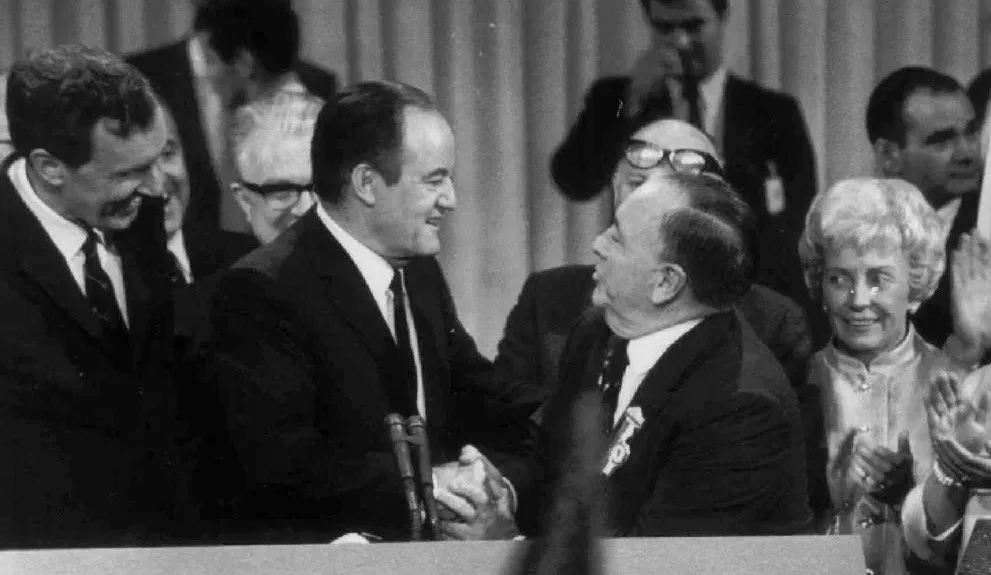
The convention took place from August 26 to August 29, 1968, at the International Amphitheatre in Chicago, Illinois. Its primary goal was to officially choose the Democratic nominees for president and vice president. The race narrowed to two main contenders: Hubert Humphrey and anti-war candidate Eugene McCarthy. The two men stood miles apart not only in their platforms, but also in how they gathered support. McCarthy drew his strength from grass-roots anti-war voters and key primary victories. Humphrey, on the other hand, relied heavily on delegates uncommitted to primary results, banking on deep alliances with party bosses and the backing of the Johnson administration.
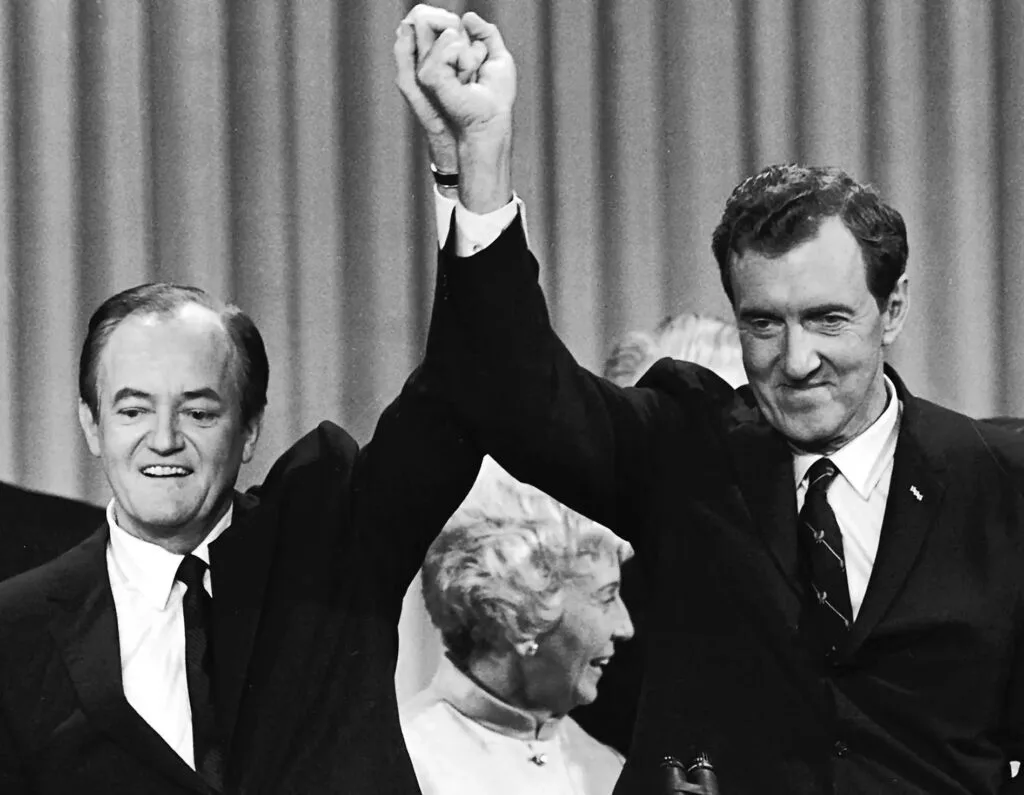
When the roll was called, Humphrey captured the presidential nomination, with Senator Edmund Muskie selected as his running mate. But the outcome did nothing to heal the party's deep wounds. While Humphrey’s allies saw his win as the end of an exhausting primary season, anti-war activists viewed it as undeniable proof that the nomination system was rigged and in urgent need of radical overhaul.
The Dawn of Modern Primary Reforms
In the wake of the 1968 convention fallout, the Democratic National Committee established the Commission on Party Structure and Delegate Selection, universally known as the McGovern–Fraser Commission. Its mission was straightforward: examine delegate selection rules and devise guidelines that would open up the nomination process to grass-roots voters.
Senator George McGovern took the lead as initial chairman, with Representative Donald Fraser playing a pivotal role in guiding the commission's work. The commission conducted a comprehensive review of state selection processes, scrutinizing transparency and evaluating whether different demographics had a meaningful voice. The findings were devastating: procedures in many states were poorly defined, completely arbitrary, and controlled by a handful of party insiders. In addition, women, young people, and racial minorities were drastically underrepresented on convention floors.
The commission enacted sweeping mandates: open selection procedures, advance notice of rules, accessible party gatherings, and strict curbs on the power of party bosses to handpick slates. National conventions were not dismantled, but their makeup was fundamentally changed. The delegate selection process was linked directly to open primaries and open caucuses, making popular votes the true driver of the presidential nomination.
This overhaul stands as the most enduring legacy of the Chicago convention. It launched the modern presidential primary era, forcing aspiring candidates to build systematic, grass-roots campaigns in states across the country to secure delegate majorities.
How Presidential Elections Were Changed Forever
Following the adoption of the new rules, states rapidly shifted toward binding primaries to choose national convention delegates. The primary calendar evolved from a minor testing ground into the central arena of American presidential politics.
In 1968, winning primaries carried no guarantee of winning the nomination. Under the new rules, delegate counts reflected the ballots cast by the electorate. Candidates could no longer rely on smoke-filled rooms and backroom deals; they had to launch retail campaigns, mobilize field operations, and directly persuade everyday voters. The reforms also transformed convention demographics, making equity, diverse representation, and procedural transparency core elements of party governance.
Although the McGovern–Fraser reforms were internal Democratic rules, they inevitably transformed the Republican Party as well. The proliferation of state primaries and the decisive influence of rank-and-file voters became standard across the entire American political landscape.
The Historical Legacy of Chicago 1968
The 1968 Chicago convention was far more than a clash between anti-war activists and police. It revealed a deep design flaw within the American political system: technical compliance with existing rules does not guarantee popular legitimacy. Humphrey won the nomination under the bylaws of his time, but his victory convinced the nation that backroom politics had run its course and that genuine authority must belong to the voters.
The McGovern–Fraser Commission's reforms answered that crisis. While they did not resolve every structural tension in American politics, they permanently elevated primaries and caucuses to center stage and established new standards of democratic transparency.
The events in Chicago also reaffirmed fundamental democratic freedoms: the right to speak, assemble peaceably, and hold institutional authority to account. Broadcast live into living rooms nationwide, the confrontations forced an enduring reckoning on the limits of state power and civil liberties. The 1968 convention did not just remake the Democratic Party; it restructured the mechanics of running for president in the United States, placing primary voters at the heart of the country's political future.
That is why the 1968 Chicago convention remains a defining watershed in American electoral history. Its central lesson endures: public trust in a democratic system depends not merely on the final outcome, but on whether citizens believe they had an authentic, meaningful voice in making the choice.
Наступна статтяHarold Washington and the “Council Wars”: How Chicago’s First African American Mayor Challenged the System