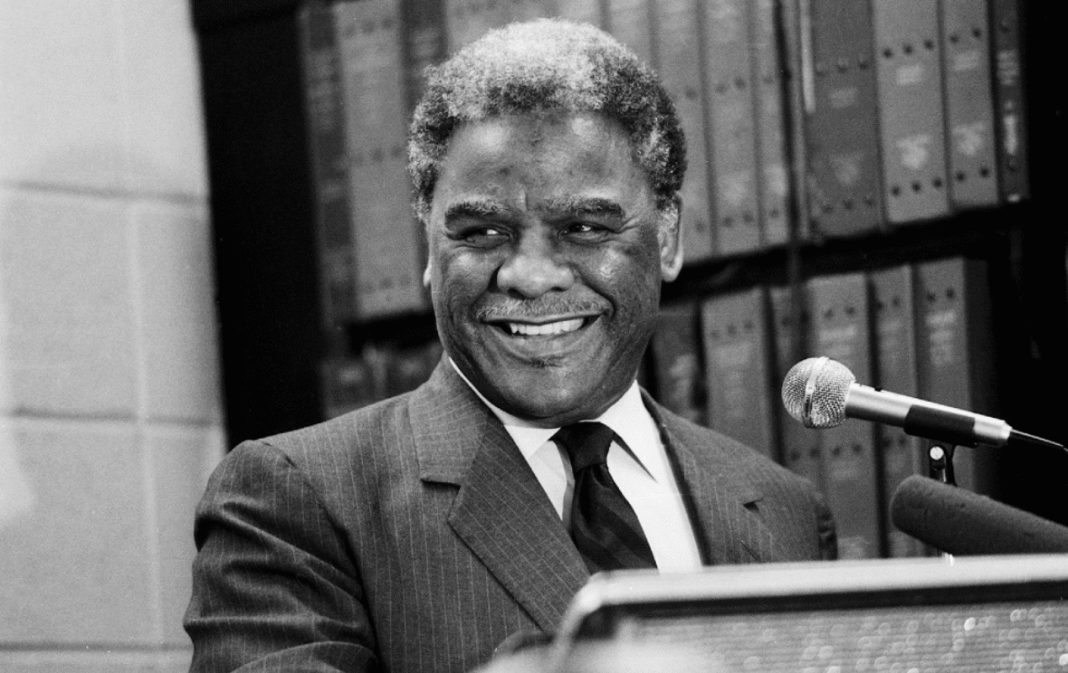

In 1983, the Chicago mayoral election felt more like a war than a standard political campaign. Harold Washington’s victory sent shockwaves through the city’s political elite. For the first time, an African American took the office of Chicago mayor, taking a firm stand against backroom deals and corrupt schemes. Throughout his tenure, Washington fought for transparency, equal rights for all neighborhoods, and the eradication of corruption. Read on to explore the story of a political leader who proved one ultimate truth: power should belong to the people, not corrupt officials. Read more on chicago-yes.
Chicago in the Early 1980s: A City Desperate for Change
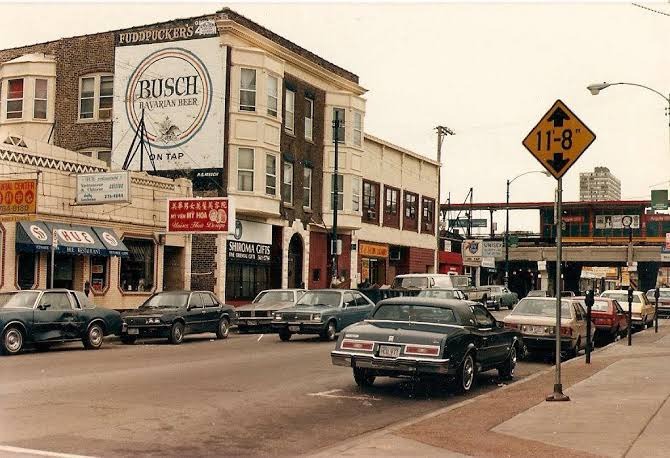
In the 1980s, much like the two preceding decades, Chicago was considered one of the most segregated and racist cities in the United States. Predominantly Black neighborhoods lacked basic infrastructure and amenities. Children of color were barred from attending public schools where white children studied.
Furthermore, massive high-rise housing projects were built for African Americans to prevent them from moving into so-called “white” neighborhoods. Not stopping at these restrictions, Chicago’s political elite pushed for the construction of extensive highway systems. These new roads physically divided Black and white communities, further exacerbating their isolation.
Beyond social inequality and systemic racism, rampant corruption plagued the city. In the 1980s, Chicago remained the prime example of a classic American political machine, led for many years by Mayor Richard J. Daley.
For decades, local authorities operated on a single principle: access to city council positions, lucrative contracts, and control over public utilities went not to qualified professionals, but to those who showed blind loyalty and followed the orders of party bosses.
This corruption was most evident in real estate development and land allocation. Aldermen (city council members) operated by unspoken rules: any decision regarding land grants or construction was approved almost automatically—provided shady backroom agreements were honored.
Local entrepreneurs could only obtain business or building permits after paying a bribe or making a “voluntary” donation to a campaign fund. On the eve of the next election, Chicago was exhausted by massive corruption and the deep social divide dominating the city.
The 1983 Election and Harold Washington’s Historic Triumph
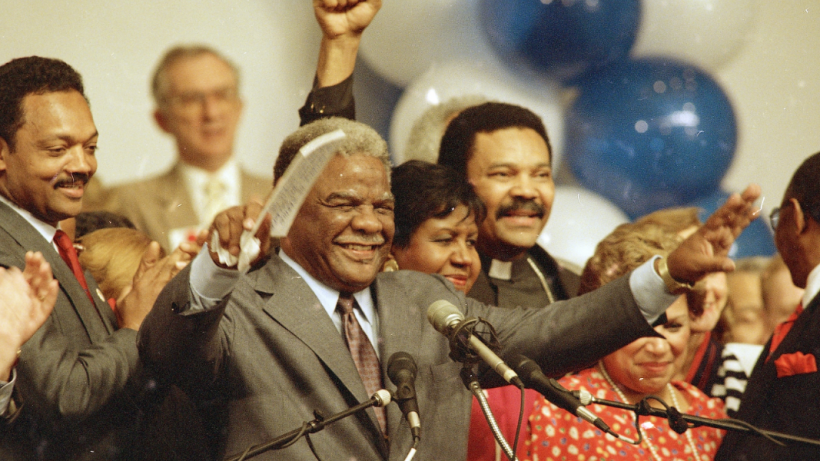
Harold Washington was successfully serving in the U.S. Congress and was perfectly content with his position. The politician had no intention of running for mayor. However, local African American leaders strongly urged him to enter the race. Washington agreed, but set two strict conditions: solid campaign financing and the registration of at least 50,000 new Black voters in Chicago.
His supporters managed to mobilize the required numbers, and Washington officially announced his candidacy. He was a brilliant intellectual with a knack for connecting with people from all walks of life. His powerful charisma and outstanding oratorical skills made him a captivating and extraordinary figure in the political arena.
In the 1983 election, Washington emerged victorious, becoming the first African American to lead Chicago. His success sparked fierce resistance not only from Republicans but also from a faction of Democrats who backed the city’s old establishment.
Campaigning under the slogan “Let’s come together for one city,” Washington consistently called for justice and reform. This message resonated deeply. When the votes were tallied, Washington received overwhelming support: 99% of the Black vote and 89% of the Latino vote in Chicago.
Despite his electoral triumph, Washington’s ultimate battle for equality and the dismantling of systemic racism was just beginning.
The “Council Wars”: How the Mayor Challenged the Old Machine
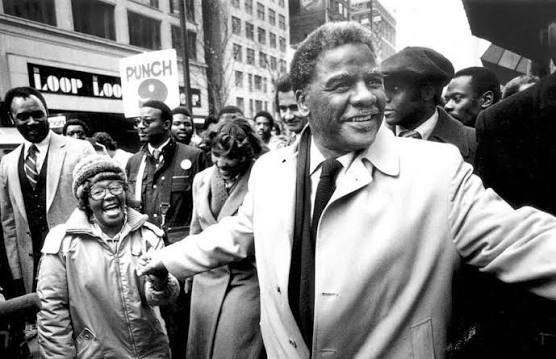
Any attempts by the new mayor to reform the political system or initiate new policies were met with fierce sabotage from an opposition faction led by conservatives Edward Burke and Edward Vrdolyak. Controlling a majority of the city council seats, they easily blocked almost all of Washington’s initiatives.
This standoff went down in Chicago history as the “Council Wars.” The opposition prevented the mayor from appointing his allies to key positions and stalled the adoption of the city budget. Furthermore, supporters of conservative and openly racist policies quickly seized control of vital committees, significantly complicating the work of Washington’s team. To curb the opposition’s corrupt initiatives, the mayor frequently had to use his veto power.
Nevertheless, Harold Washington managed to push through several crucial reforms that gradually reshaped Chicago’s political landscape. His major achievements included:
- Abolishing the patronage system. Backed by court rulings, the mayor finally ended the practice of hiring and firing municipal employees based on political slates. As a result, thousands of civil servants were no longer dependent on their party affiliation to keep their jobs.
- Fair distribution of resources. Road repairs, street lighting, and garbage collection in Chicago were finally funded based on the actual needs of neighborhoods, rather than their racial makeup or political loyalty. For the first time, the historically neglected South and West Sides felt that local government actually cared about its citizens.
- Transparent budgets and contracts. Under Washington, the city introduced new, open rules for public bidding. Additionally, information about municipal spending and issued licenses became public record. Because of these changes, some aldermen lost the ability to hand out lucrative contracts to their loyal cronies.
The Turning Point of 1986
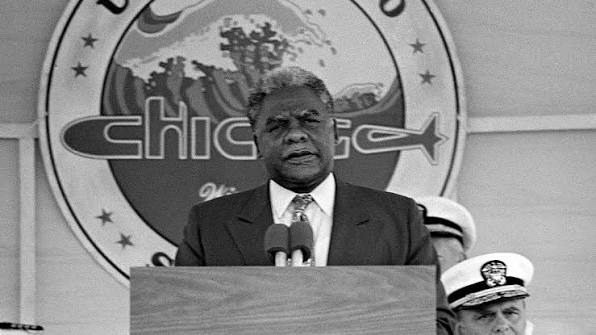
The tide dramatically turned in Washington’s favor in 1986. A federal court ordered special elections in several city wards. As a result, the balance of power in the city council evened out to a 25-25 split. Since the mayor held the tie-breaking vote, Washington gained the long-awaited upper hand.
Having secured control over the legislative body, the mayor fully seized the political initiative. He also forced the collapse of the opposition bloc.
In 1987, Harold Washington was re-elected to a second term with even broader voter support. Black politicians were appointed to several key posts, further solidifying the mayor’s authority among the African American population.
Washington had ambitious, forward-looking plans. He intended to redirect financial resources from the affluent downtown to neglected neighborhoods and actively create jobs for low-income residents. To stimulate the economy, businesses began receiving special city subsidies for creating new job opportunities.
Tragically, he served only seven months of his second term. On November 25, 1987, the politician collapsed in his own office. Despite the best efforts of paramedics, he could not be saved. The official cause of death was a heart attack.
Following the mayor’s death, his political coalition fractured, and many ambitious projects remained unfulfilled.
Political Legacy: How Harold Washington Changed Chicago Forever
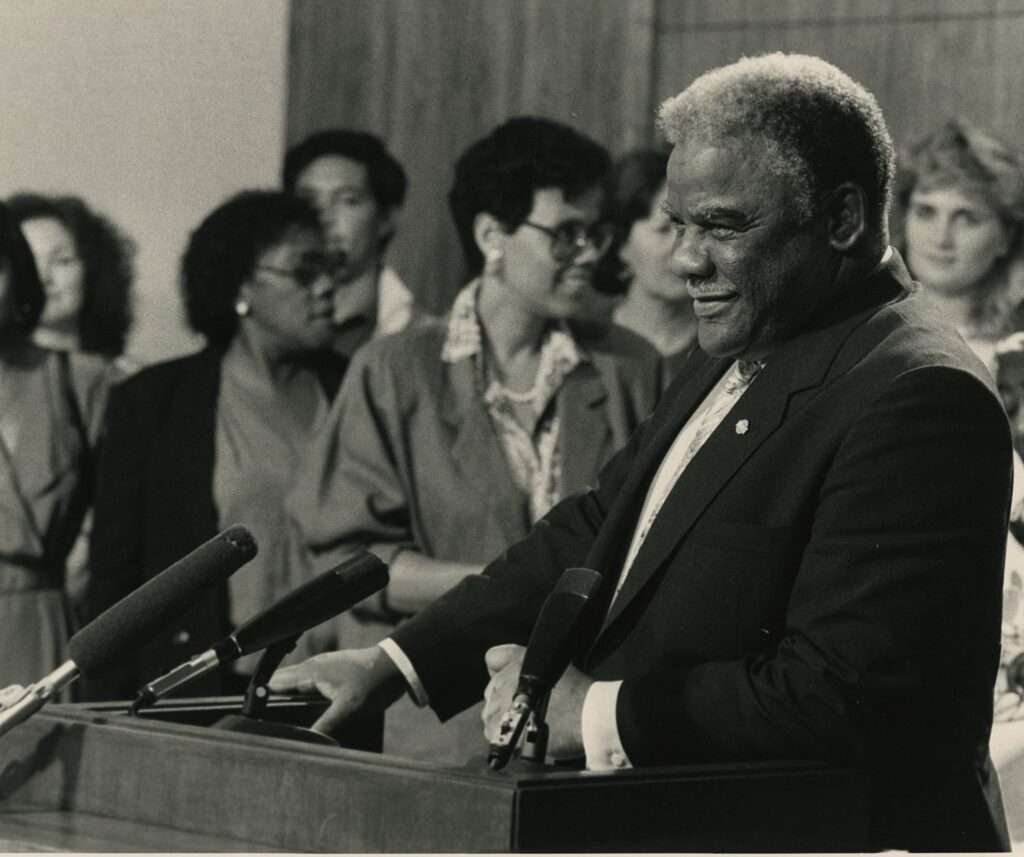
“If Harold had lived, our city’s growth would have been much more balanced,” noted David Cook, who worked with the Chicago mayor for many years.
This quote perfectly captures the essence of the politician’s reforms: a city must work for every resident, not just a privileged few.
Before Washington came to power, Chicago was strictly divided into castes. The lion’s share of municipal investments flowed into the downtown business district and affluent white neighborhoods, while predominantly Latino and African American areas languished in a state of decay for decades.
Washington managed to break this corrupt machine. Through his reforms, he proved that high-quality roads, social programs, and modern infrastructure must be accessible to every citizen, regardless of skin color.
His bold vision of city governance set a new standard—one that all subsequent mayors of Chicago would have to reckon with.